
How to Organize Medical Records in a Personal Injury Case
Medical records can become one of the largest and most important collections of documents in a personal injury case. Emergency room records, physician notes, diagnostic reports, imaging, treatment records, medical bills, prescriptions, and specialist evaluations can quickly accumulate as a client moves through the healthcare system.
For a personal injury law firm, simply storing these documents is not enough. Attorneys and legal teams need to understand what happened, when it happened, which providers treated the client, how treatment progressed, and how the medical evidence relates to the claim.
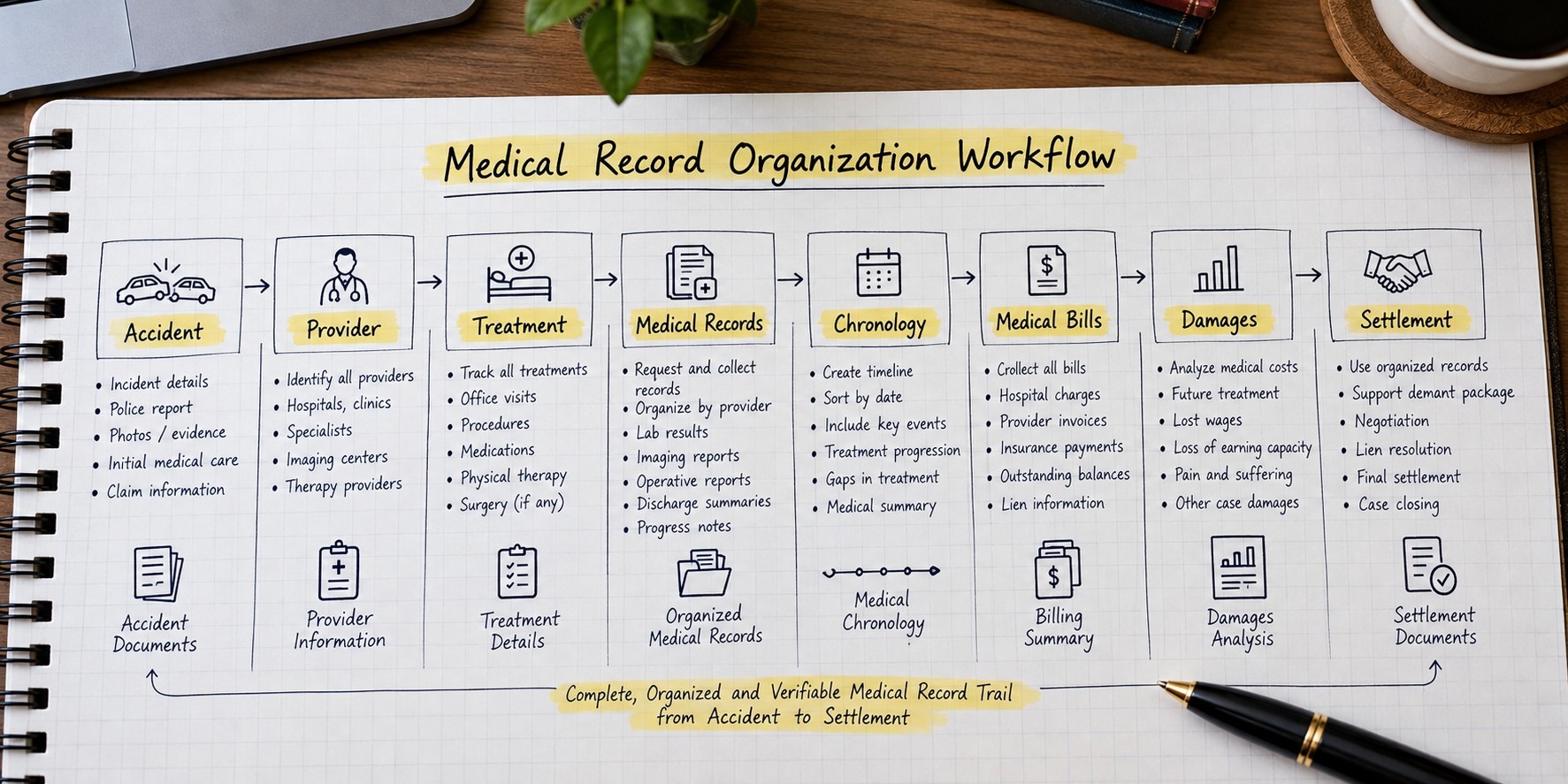
A structured medical-record management process can turn a large collection of documents into information that is easier to review and use throughout the case.
1. Start With a Complete Provider List
The first step is identifying every healthcare provider involved in the client's treatment.
Depending on the injury, this may include:
Emergency departments
Primary-care physicians
Orthopedic specialists
Neurologists
Surgeons
Physical therapists
Chiropractors
Imaging centers
Pain-management providers
Pharmacies
Other specialists
Create a provider record containing the provider's name, specialty, location, contact information, treatment dates, and the status of requested records.
This gives the legal team a clear picture of where medical information is coming from and which records may still be outstanding.
2. Separate Medical Records From Medical Bills
Medical records and medical bills serve different purposes and should be organized accordingly.
Clinical records can document symptoms, diagnoses, examinations, treatment plans, procedures, and the client's progress.
Bills provide financial information about the cost of treatment.
Keeping both connected to the relevant provider and treatment period allows the legal team to review the medical history and financial impact together without treating them as the same type of document.
3. Organize Records Chronologically
A chronological structure is one of the most useful ways to make a large medical file understandable.
A basic chronology might look like:
Date of Accident → Emergency Treatment → Diagnostic Imaging → Specialist Evaluation → Treatment → Surgery → Rehabilitation → Follow-Up
Each entry can include the treatment date, provider, type of visit, diagnosis, treatment provided, relevant findings, and associated documents.
A chronological medical history can help attorneys quickly understand how the client's treatment developed over time.
4. Build a Medical Chronology
A medical chronology goes beyond arranging documents by date. It summarizes the relevant medical events into an organized timeline.
For each event, the firm may capture:
Date of service
Provider
Facility
Symptoms
Diagnosis
Examination findings
Treatment
Procedures
Imaging
Recommendations
Follow-up
Related documents
The chronology can provide a high-level view of the client's treatment without requiring the attorney to open every document individually.
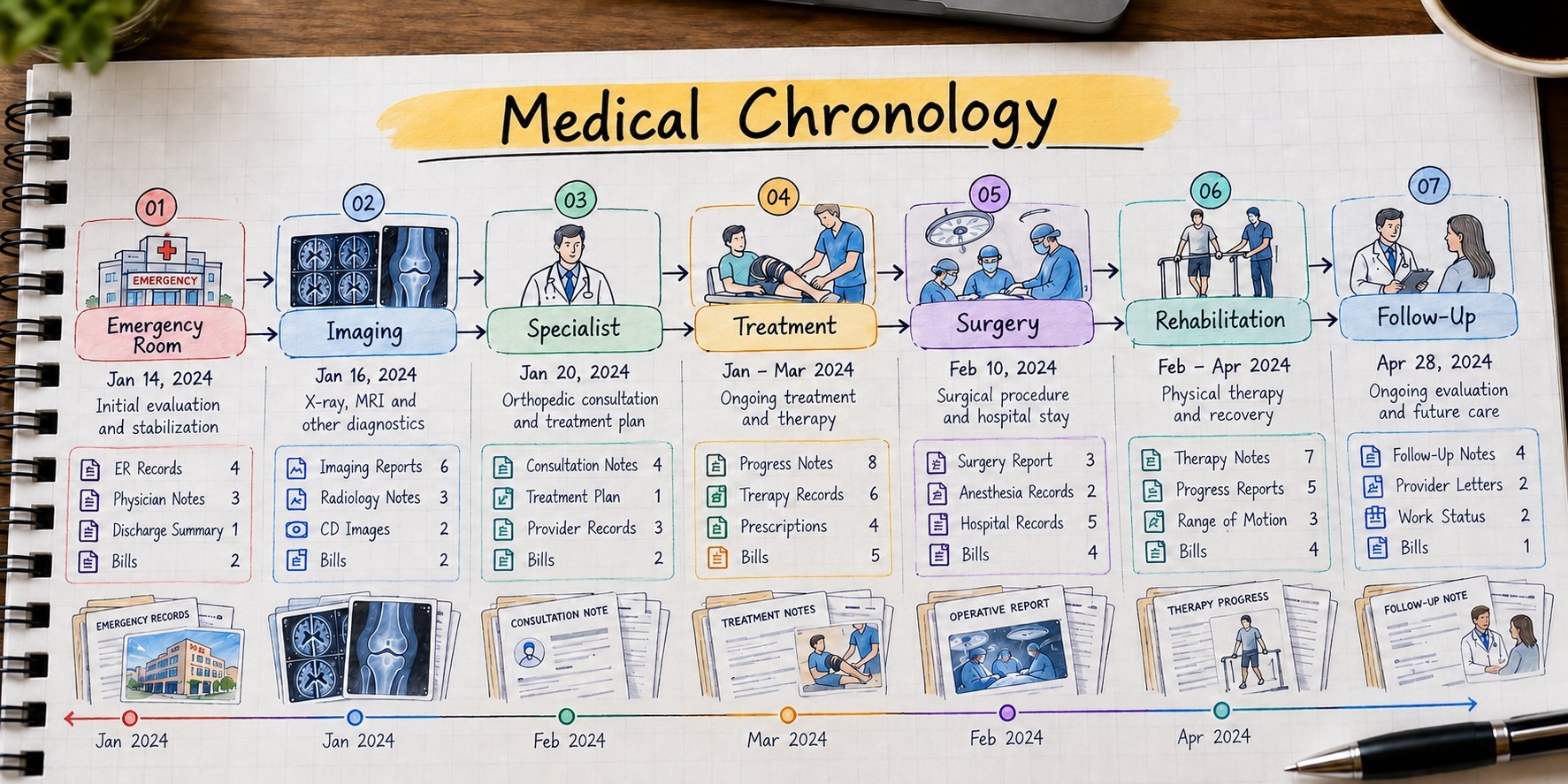
The underlying medical records should remain available for detailed review and verification.
5. Track Missing Records
One of the most common organizational problems is assuming that the medical file is complete.
A provider may have sent some records but not others. For example, a firm may receive a physician's notes but still be waiting for imaging, billing records, or records from a later treatment period.
The case-management process should therefore distinguish between:
Received → Partially Received → Requested → Outstanding → Reviewed
This makes missing information visible before the firm relies on an incomplete medical history.
6. Connect Treatment to the Injury
The purpose of organizing medical records is not simply to create a document archive.
The legal team needs to understand the relationship between the incident, the reported injuries, treatment, and the client's recovery or ongoing symptoms.
Relevant information can include:
Initial complaints
Diagnoses
Objective findings
Treatment progression
Changes in symptoms
Procedures
Recovery milestones
Continuing limitations
This information can then be reviewed alongside accident evidence and other case information.
7. Track Medical Expenses
Medical expenses should be organized alongside the corresponding treatment.
A structured record can include:
Provider
Date of service
Procedure or treatment
Amount billed
Amount paid
Outstanding balance
Insurance information
Supporting bill
Keeping financial information connected to treatment can make it easier to identify the total documented medical expenses when evaluating damages and preparing settlement materials.
8. Manage Records From Multiple Providers
A client may receive treatment from several providers over an extended period.
Without a consistent structure, records can become difficult to navigate because every provider may use different terminology, document formats, and organizational conventions.
A centralized medical-record workflow can normalize this information around common fields such as:
Provider → Date → Treatment → Diagnosis → Findings → Cost → Document
This makes it easier for the legal team to compare information across providers.
9. Protect Confidential Medical Information
Medical records contain sensitive client information and should be handled accordingly.
Law firms should establish appropriate access controls, document permissions, secure storage, authentication, and audit processes for systems containing medical information.
Not every employee needs unrestricted access to every medical document. Access should be based on the firm's roles, responsibilities, security policies, and applicable legal and contractual requirements.
Secure organization is therefore part of effective medical-record management, not something that should be added later.
10. Prepare Medical Information for Settlement
When a case moves toward settlement, the legal team needs to bring together the medical evidence that supports the claim.
A well-organized medical record can make it easier to review:
Injury → Treatment → Diagnosis → Medical Expenses → Recovery → Ongoing Impact
The firm can then identify relevant records and bills when preparing a demand package or evaluating settlement discussions.
Instead of spending significant time searching through folders for individual records, the team can work from an established medical chronology and return to the original documents when detailed verification is required.
Medical Records Should Be Connected to the Case
Medical records should not exist as an isolated document repository.
They are part of a larger personal injury workflow:
Client → Injury → Provider → Treatment → Medical Record → Medical Expense → Damages → Demand → Settlement
Connecting these elements helps the legal team understand how medical information contributes to the overall case.
It also means that when information changes, the impact can be evaluated within the broader case context.
What Should Law Firms Look for in Medical-Record Management Software?
For firms handling a large personal injury caseload, useful medical-record capabilities may include:
Provider management
Medical document storage
Chronological treatment timelines
Medical bill tracking
Diagnosis and treatment information
Missing-record tracking
Document search
Record categorization
Secure access controls
Audit trails
Case-level medical summaries
Integration with broader case workflows
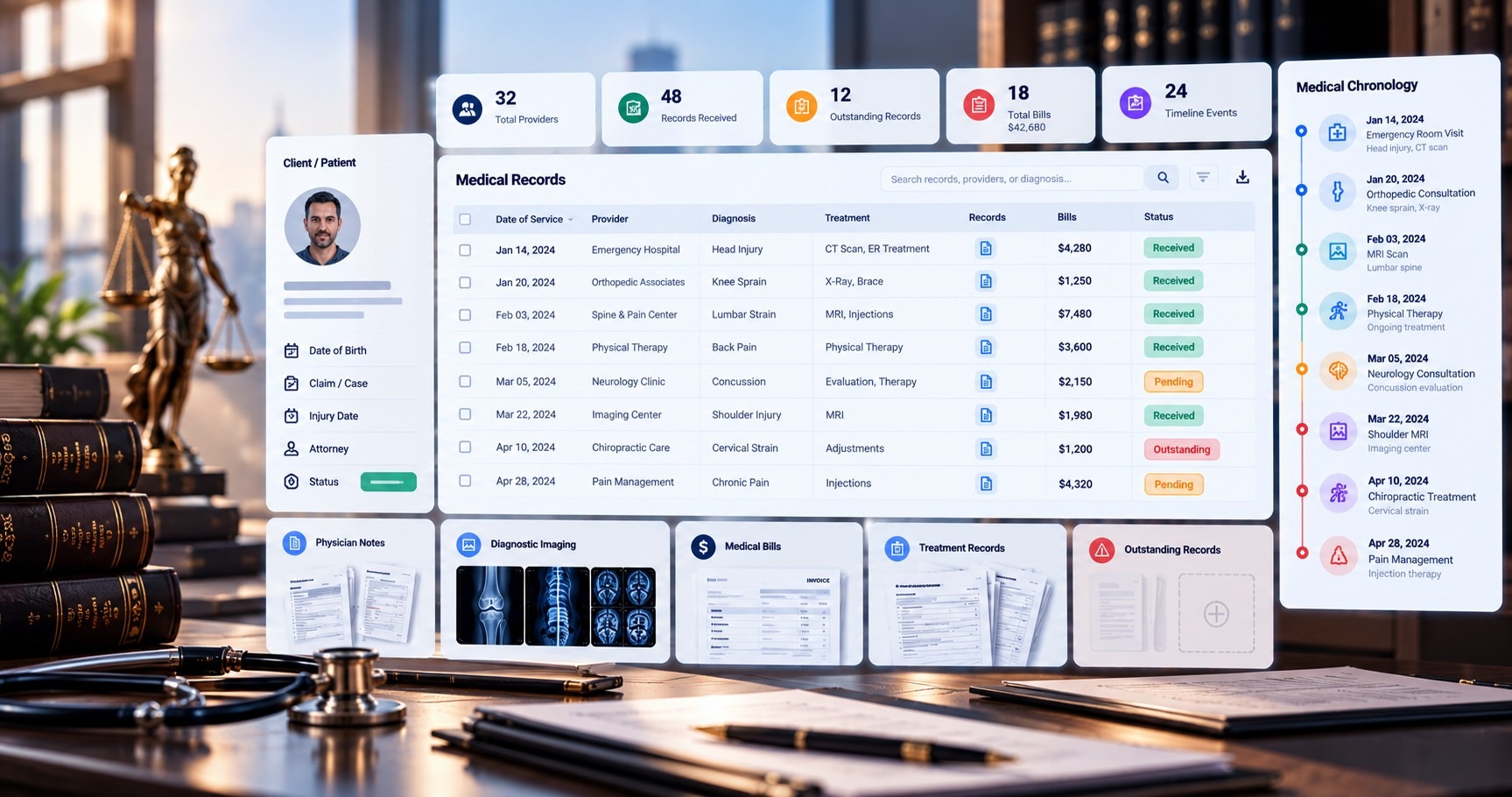
The objective is to reduce administrative effort while making medical information easier to find, understand, and use.
Final Thoughts
Organizing medical records in a personal injury case is about more than putting PDFs into folders.
A useful system connects providers, treatment dates, diagnoses, medical records, bills, expenses, and chronology into a structured view of the client's medical history.
When medical information is organized from the beginning, attorneys and their teams can spend less time searching through documents and more time reviewing the information that matters to the case.
For plaintiff law firms, a structured medical-record workflow can become an important part of case evaluation, damages analysis, demand preparation, and settlement management.