
One of the most common questions after an accident is, “How long will it take to settle my personal injury case?” The answer depends on the severity of the injury, the available evidence, who is responsible, insurance negotiations, and whether a lawsuit becomes necessary.
Some straightforward claims resolve within a few months, while serious or disputed cases can take several years. There is no universal settlement timeline that applies to every personal injury claim in the United States.
Understanding each stage helps injured people set realistic expectations and helps plaintiff law firms manage their caseloads more effectively.
How Long Does a Typical Personal Injury Settlement Take?
A personal injury claim may settle in a few months when liability is clear, injuries are relatively minor, and the insurance company agrees to reasonable compensation. More complicated claims can take a year or longer, particularly when treatment continues or the parties disagree about liability or damages. Cases that proceed through litigation may take several years.
These are broad planning estimates, not guaranteed deadlines. The timeline depends on the facts, jurisdiction, court schedule, and willingness of both sides to negotiate.
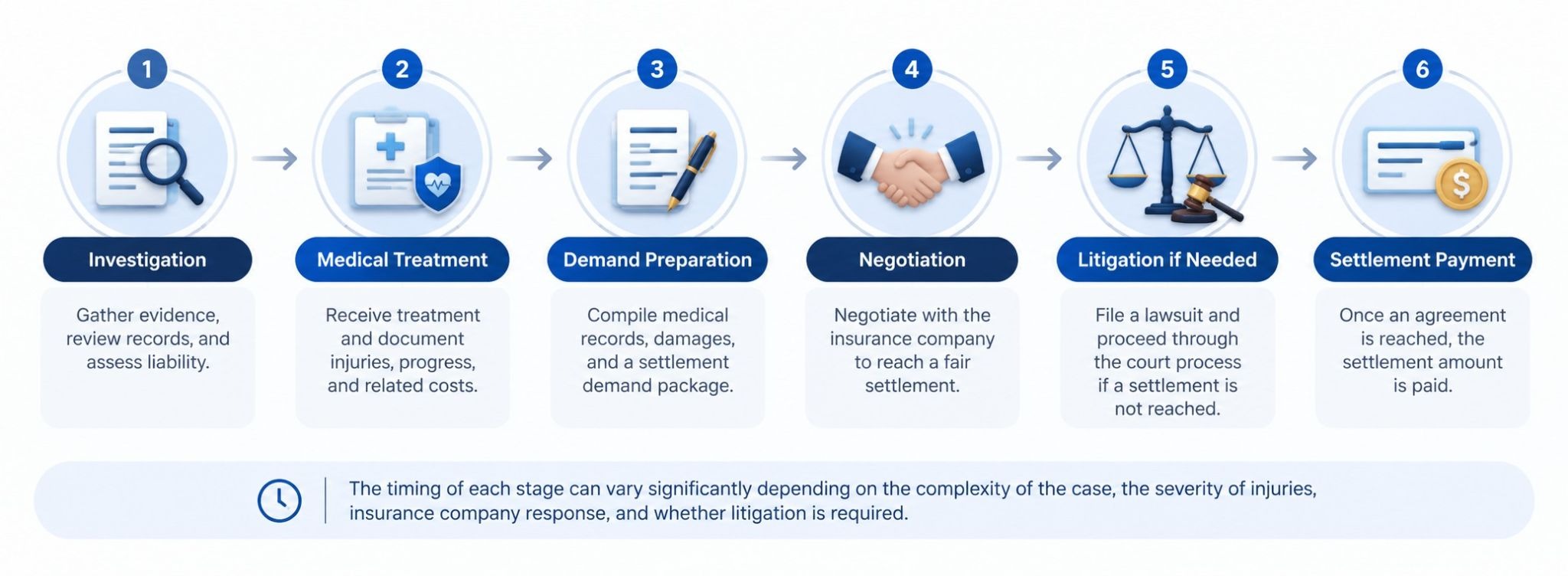
The Personal Injury Settlement Timeline: Step by Step
1. Initial Investigation and Evidence Collection
The process begins with documenting the accident, identifying potentially responsible parties, notifying insurers, and collecting evidence. Depending on the case, this may include accident reports, photographs, witness statements, medical records, and other relevant documentation.
Clear evidence can help resolve questions about fault. Disputed liability, missing records, or multiple parties can extend the investigation.
2. Medical Treatment and Injury Assessment
Medical treatment is often one of the biggest factors affecting settlement timing. Attorneys need sufficient information to evaluate the injuries, medical expenses, future treatment needs, lost income, and other damages.
In some cases, the treating physician determines that the patient's condition has reached maximum medical improvement (MMI), meaning it has stabilized and further significant improvement is not expected. MMI does not mean every case must wait until that point to settle, but understanding the long-term outlook can be important before accepting a final settlement.
Settling too early can leave future losses inadequately accounted for. Once a settlement and release become binding, obtaining additional compensation for the same claim may not be possible.
3. Medical Records and Demand Package Preparation
After sufficient evidence and damages information are available, the attorney may prepare a demand package for the insurer. It commonly includes medical records, bills, proof of lost wages, evidence of liability, and an explanation of the compensation sought.
Incomplete documentation or outstanding medical records can delay submission. Organizing evidence throughout the case can reduce avoidable administrative work.
4. Insurance Company Review and Negotiations
The insurer reviews the demand and may accept it, reject it, request additional information, or make a counteroffer. Negotiations can conclude quickly when both sides agree on liability and damages. They may continue for months when the difference between the requested amount and the insurer's offer is substantial.
There is no single response time that applies to every personal injury demand nationwide. Applicable laws, policy terms, and the circumstances of the claim can affect the process.
5. Lawsuit, Discovery, and Possible Trial
If negotiations fail, the attorney may recommend filing a lawsuit. Litigation introduces additional steps, including pleadings, discovery, depositions, expert evaluations, motions, and court scheduling.
A lawsuit does not automatically mean the case will go to trial. Parties may settle during discovery, mediation, or shortly before trial. However, court involvement can significantly extend the overall timeline.
Important: Settlement negotiations do not automatically pause the statute of limitations. The applicable filing deadline must be identified and tracked separately, based on the relevant state law and claim type.
6. Settlement Agreement and Payment
Reaching an agreement is not always the final step. The parties may need to finalize the settlement documents, obtain signatures, satisfy applicable approval requirements, and process payment.
The distribution to the client can take additional time while attorneys resolve medical liens, reimbursement claims, case expenses, and other authorized deductions. The exact timing depends on the settlement terms and the requirements that apply to the case.
What Can Delay a Personal Injury Settlement?
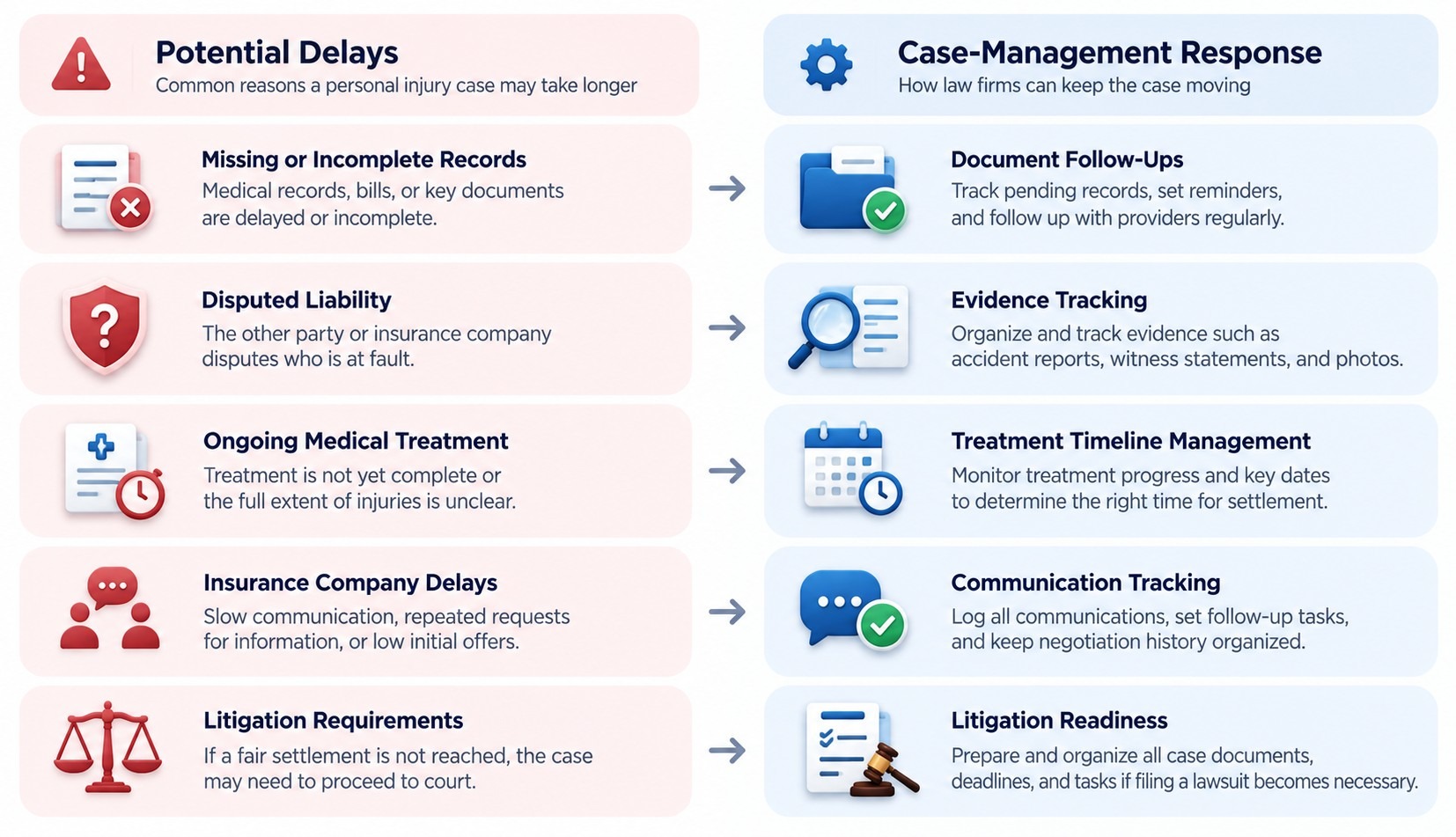
Several factors can extend the timeline:
Serious injuries: Longer treatment and uncertain future medical needs can complicate damage calculations.
Disputed liability: Conflicting accounts or questions about fault may require further investigation.
Missing documentation: Delayed medical records, bills, wage verification, or expert reports can hold up a demand.
Multiple defendants or insurers: Coordinating responsibility and coverage can make negotiations more complex.
Low settlement offers: A substantial gap between the parties' positions can lead to prolonged negotiations or litigation.
Court backlogs: Trial dates and procedural requirements vary by jurisdiction.
Liens and reimbursement issues: These can delay final disbursement even after the settlement amount has been agreed upon.
Can a Personal Injury Case Settle Faster?
Although no attorney can guarantee a settlement date, organized case management can help reduce preventable delays.
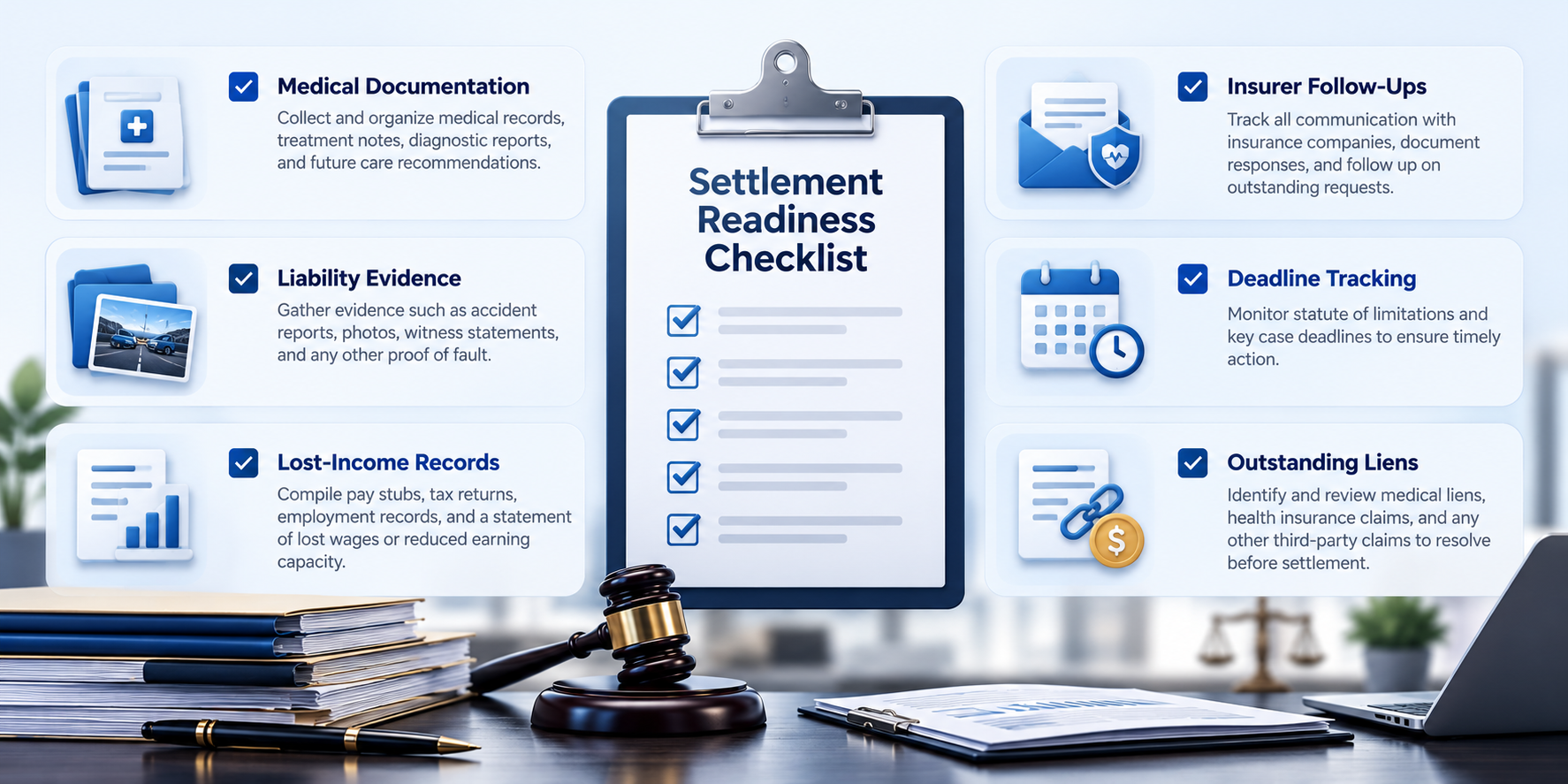
Law firms can maintain a clear record of treatment progress, outstanding documents, insurer communications, upcoming deadlines, and negotiation status. Assigning responsibility for follow-ups and reviewing cases with no recent activity can help teams identify stalled matters earlier.
A well-prepared demand supported by complete evidence can also reduce unnecessary back-and-forth. However, efficiency should never come at the expense of properly evaluating the client's injuries, losses, and legal options.
Final Thoughts
How long a personal injury case takes to settle depends on the evidence, medical outlook, liability disputes, negotiations, and whether litigation is required. Some claims resolve within months, while complex cases can take years. The goal is not simply to settle quickly, but to reach an informed resolution without avoidable delays.
For plaintiff law firms handling multiple active cases, consistent deadline tracking, organized case records, and visible next steps can make settlement workflows easier to manage.
Looking for Personal Injury Case Management Software?
If your firm wants to improve case visibility and manage personal injury matters from intake through settlement, explore Lextiff, a legal case management platform designed for plaintiff law firms. A structured case workflow can help teams keep track of case progress, tasks, deadlines, and relevant financial information in one organized system.
Explore Lextiff to learn more about managing personal injury cases and building a more organized settlement workflow.